What is Website Analytics Intelligence?
Discover how modern analytics goes beyond simple pageviews to provide actionable intelligence about your visitors and their behavior patterns.


Website analytics has evolved far beyond simple page views and bounce rates. Today's analytics intelligence represents a fundamental shift from descriptive reporting to predictive insights, transforming how businesses understand and act on their digital presence.
The Evolution of Web Analytics
Traditional web analytics tools have served us well for decades, providing essential metrics like:
- Page views and unique visitors
- Traffic sources and referrers
- Basic demographic information
- Session duration and bounce rates
But this approach has significant limitations. These metrics tell you what happened, but rarely explain why it happened or what you should do about it.
What Makes Analytics "Intelligent"?
Analytics intelligence goes several steps further by incorporating:
1. Behavioral Pattern Recognition
Instead of just tracking individual actions, intelligent analytics systems identify patterns in user behavior. They can detect when a visitor is likely to convert, when they're about to leave, or when they represent high value to your business.
2. Predictive Capabilities
Modern analytics platforms use machine learning to predict future outcomes based on current behavior. This means you can:
- Identify high-value visitors in real-time
- Predict which users are likely to convert
- Anticipate when customers might churn
- Optimize experiences based on predicted intent
3. Contextual Understanding
Rather than viewing each interaction in isolation, intelligent analytics systems understand the broader context of user journeys, considering factors like device type, time of day, referral source, and behavioral history to provide nuanced insights.
The Power of Visual Intelligence
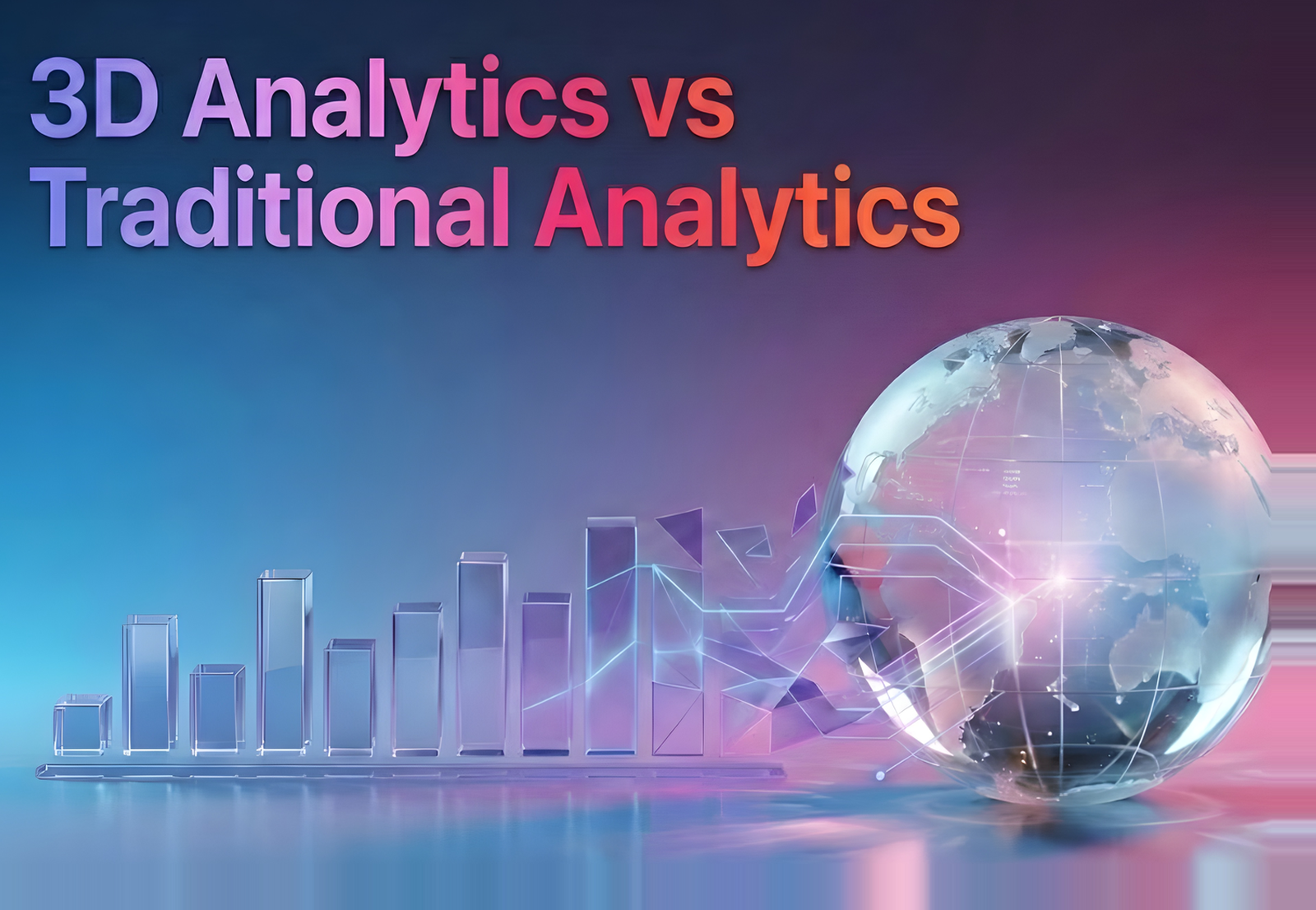
One of the most significant advances in analytics intelligence is the shift toward visual data representation. Traditional dashboards with charts and graphs are being replaced by immersive, interactive visualizations that make complex data intuitive to understand.
Consider the difference between a spreadsheet showing visitor locations versus a 3D globe where you can actually see the flow of traffic across continents, with visual indicators for visitor value and engagement levels. The latter not only conveys more information but does so in a way that enables instant understanding and action.
Real-World Applications
E-commerce Optimization
An online retailer using analytics intelligence might discover that visitors from certain geographic regions who view specific product categories during evening hours have a 73% higher conversion rate. This insight enables targeted campaigns and inventory decisions.
Content Strategy
Publishers can identify content themes that not only drive traffic but also lead to meaningful engagement, subscription conversions, or specific user actions, enabling data-driven editorial decisions.
SaaS Product Development
Software companies can understand which features correlate with user retention, identify onboarding friction points, and predict which trial users are most likely to convert to paid plans.
The Future of Analytics Intelligence
As we move forward, analytics intelligence will become even more sophisticated, incorporating:
- Real-time personalization: Instant adaptation of user experiences based on behavioral signals
- Cross-platform intelligence: Unified understanding of user behavior across web, mobile, and offline touchpoints
- Automated insights: AI-powered discovery of opportunities and issues without manual analysis
- Predictive interventions: Proactive recommendations and actions based on predicted outcomes
Getting Started with Analytics Intelligence
The transition from traditional analytics to intelligence-driven insights doesn't happen overnight. Here's how to begin:
- Define your success metrics: Move beyond vanity metrics to focus on business outcomes
- Invest in visual analytics: Choose platforms that make data intuitive and actionable
- Embrace real-time insights: Focus on tools that enable immediate understanding and action
- Train your team: Ensure your team can interpret and act on intelligent insights
Conclusion
Website analytics intelligence represents a fundamental evolution in how we understand digital experiences. By moving beyond simple reporting to predictive, visual, and contextual insights, businesses can make more informed decisions, create better user experiences, and drive meaningful growth.
The future belongs to organizations that can not only collect data but transform it into actionable intelligence. The question isn't whether you should adopt analytics intelligence—it's how quickly you can make the transition.
Sarah Chen
Head of Product at Zenovay
Sarah leads product development at Zenovay, focusing on turning complex data into actionable insights for businesses worldwide. With over 8 years of experience in analytics and product strategy, she's passionate about making data accessible and meaningful.